Issue 01 — Autumn 2026New creative talent before everyone elseDirectors, DPs, editors, animators and performers found earlyAccra · London · Prague · Shanghai · Amsterdam · Budapest · Los Angeles · Paris · SydneyEvery video embedded, every creator linkedWatch, then follow themIssue 01 — Autumn 2026New creative talent before everyone elseDirectors, DPs, editors, animators and performers found earlyAccra · London · Prague · Shanghai · Amsterdam · Budapest · Los Angeles · Paris · SydneyEvery video embedded, every creator linkedWatch, then follow them
An experimental short that weaves archival imagery and new 16mm into a Sámi cosmogony about colonial and capitalist violence.
24 September 2026
Jyoti Mistry’s The God that Destroys stitches archival frames and fresh 16mm to probe Sámi cosmology and the legacies of colonial extraction.
AI-modified, based on directorsnotes.com
Play · vimeo
Plays from the creator’s own upload on Vimeo. Open on Vimeo
Jyoti Mistry — The God that Destroys
Jyoti Mistry’s The God that Destroys screened in Locarno’s Concorso Corti d’Autore as an Austria–Sweden co‑production. It’s a compact, formal experiment that pairs found footage with newly shot material to ask how cultural and economic violence reverberate through time.
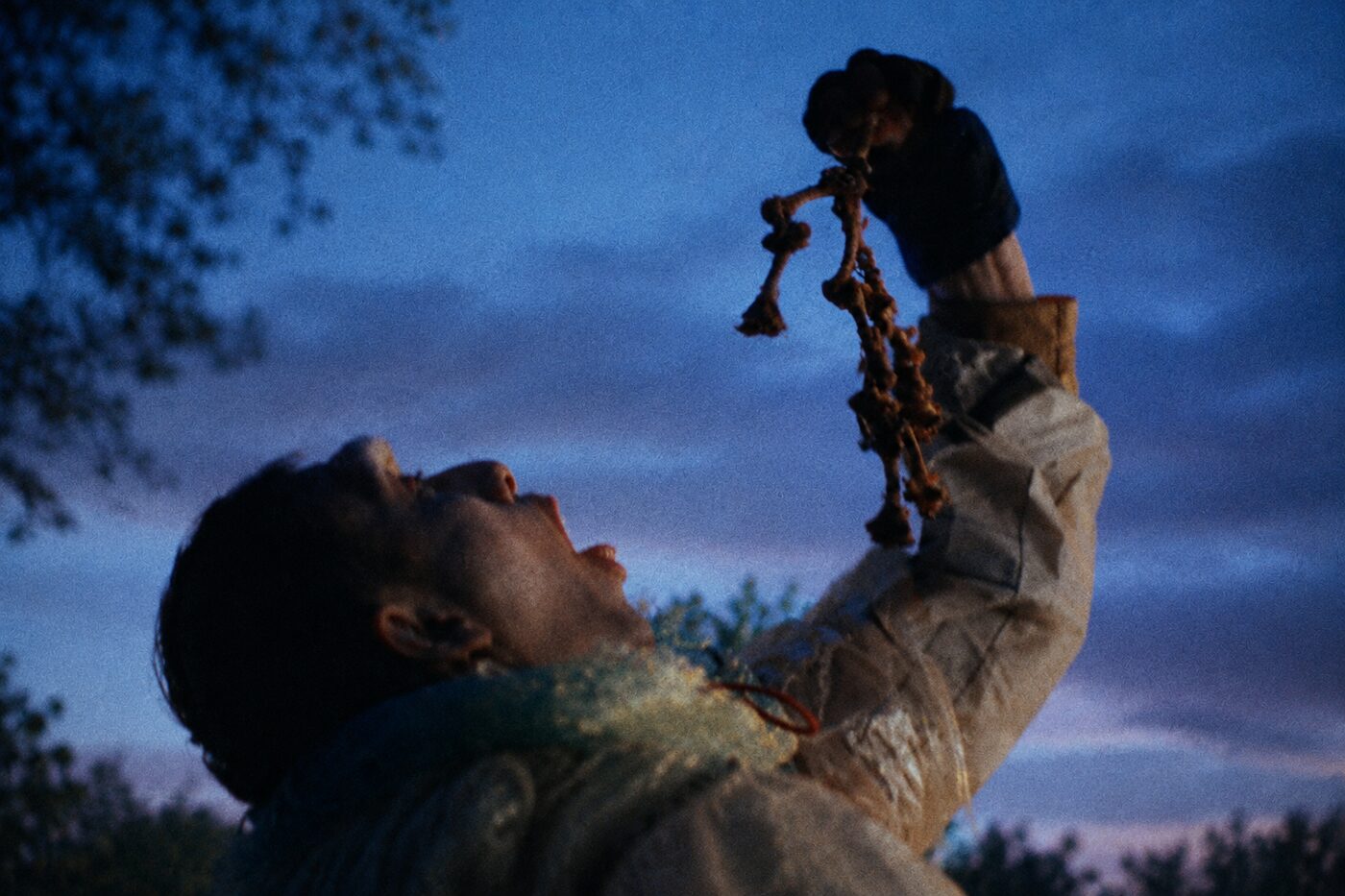
The film assembles black‑and‑white stills from the early 20th century with fresh 16mm that intentionally mimics the archive. As Director's Notes puts it, "Black and white images from the first half of the 20th century are woven together with newly shot 16mm footage that mimics the archive and animation to create a tapestry that intertwines Sámi cosmology with commentary on capitalist destruction."
Mistry uses this patchwork to place Sámi cosmology centre stage while interrogating the legacy of Swedish colonialism and assimilation. The article highlights how the film’s sound design plays a vital role: "The Siren of the Future, performed by Sara Ajnnak through traditional Sámi yoik and voiceover... aided by original songs performed by the Gothenburg Opera’s Children’s Choir." Director's Notes also remarks that "this beautiful chanting as a soundtrack is by far the most enjoyable element of The God that Destroys."
The result is an elegiac, sometimes chilly short that relies on montage and voice to suggest histories rather than explain them. That restraint is central to its power: it’s less about narrative closure and more about the textures of memory, loss and cultural endurance.